







Looking at the back of packaged foods can be confusing. The nutrition facts and ingredients may seem like a foreign language and be hard to understand.
“The truth is that the nutrition facts label provides essential information to help you know what you’re eating,” says Kavita Goyal, MD, a primary care provider at Mount Nittany Health. “When you know what you’re eating, you can make more informed food choices. Let’s break down the nutrition label to help you understand each section.”
Serving size
The serving size and the servings per container are at the top of the label. Serving sizes are standardized for easy comparison between similar foods. Shredded cheese, for example, will typically be displayed as 28 grams, 1 ounce or ¼ cup. This allows you to compare quickly and easily between different cheeses.
“Be mindful of how many servings you consume,” says Dr. Goyal. “If you eat two servings, you are consuming double the calories and nutrients.”
Calories
Nearly everything we consume contains calories, which provide a measure of energy from a serving of food. Calories come from three energy sources — carbohydrates, proteins and fats. Each of these macronutrients provides a different calorie count.
- Carbohydrates: 4 calories per gram
- Fats: 9 calories per gram
- Protein: 4 calories per gram
Each macronutrient plays a crucial role in your body’s functioning. Carbs primarily fuel your brain, red blood cells and nervous system. Fats help protect vital organs, insulate the body, produce hormones and aid in the absorption of vitamins A, D, E and K.
“Protein is used to repair tissues, create immune-protective antibodies, create enzymes, produce hormones, balance pH and transport nutrients in and out of your cells,” says Dr. Goyal. “While carbs and fats are common energy sources, protein is reserved and used for its primary function.”
How many calories should you eat?
Adult females ages 19 to 59 require between 1,600 and 2,400 calories daily. Adult males in the same age range need between 2,000 to 3,000 calories per day.
The macronutrient breakdown should be about 45%-65% of the calories should come from carbohydrates, 20%-35% from fats and 10%-35% from proteins. Everyone is unique in their caloric needs.
Nutrients
This section of the label displays the key nutrients the product contains. Micronutrients include vitamins and minerals crucial to your overall health and well-being. Fiber, vitamin D, calcium, iron and potassium are micronutrients good for your body.
“While your body can make vitamin D, you must obtain the rest of the micronutrients needed for your body to function correctly from your diet. Eating various foods is the best way to get all the necessary micronutrients,” says Dr. Goyal.
Percent daily value (%DV)
The %DV is typically found on the right side of the nutrition label and indicates how much a nutrient in a serving contributes to your daily diet. This percentage is based on a 2,000-calorie diet. The %DV helps you determine whether a food is high or low in nutrients. A 5% DV or less is considered low, and a 20% DV or more is considered high.
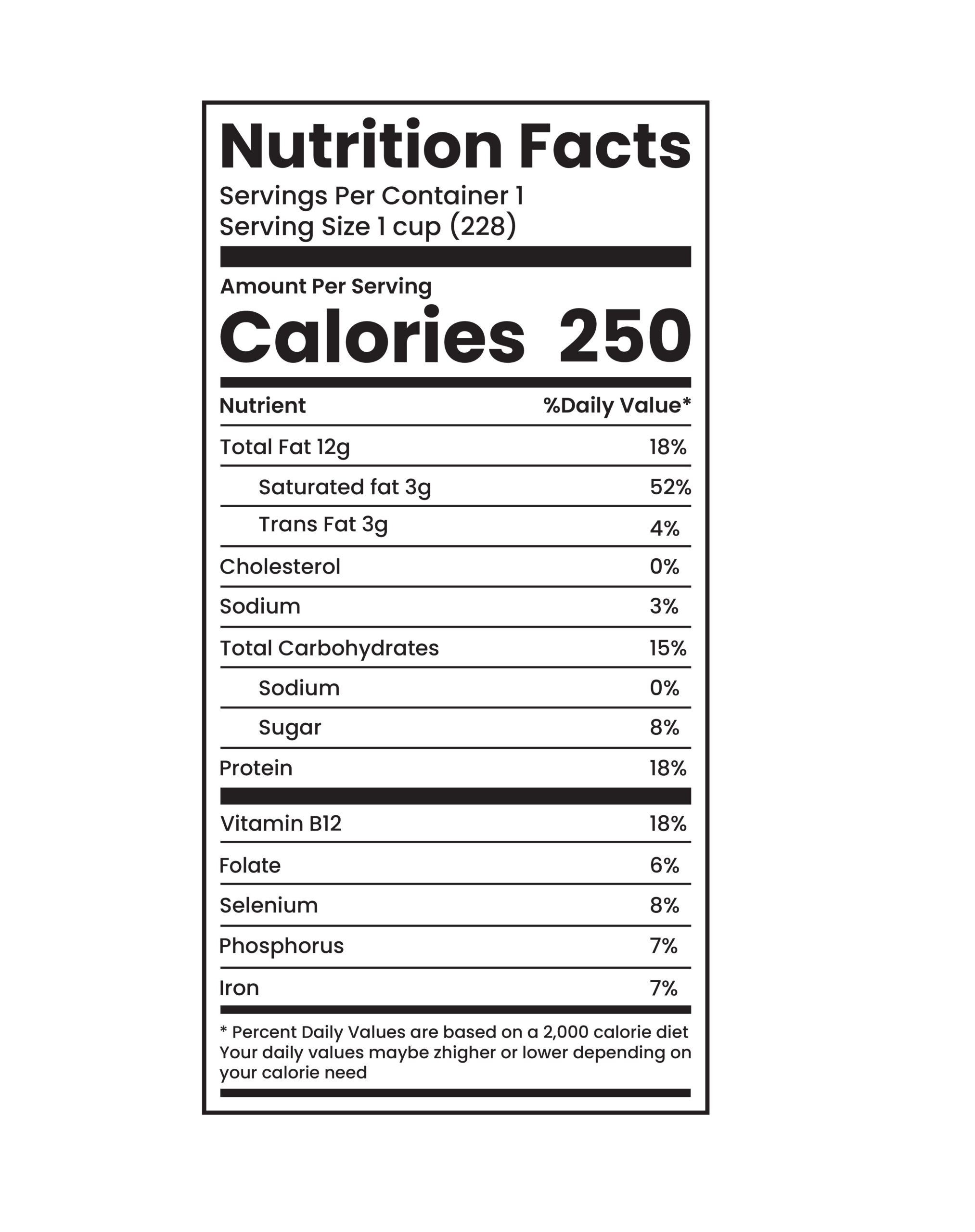
How to use the nutrition label
Now that we understand the parts of the nutrition label, what are the practical tips for using this information?
- Start with the serving size. Understanding how much is in a single serving is the first step to understanding your consumption.
- Compare total calories. Look at how many calories are in a single serving versus the entire container.
- Use the %DV as a guide. If you want to consume less nutrients like saturated fat or sodium, choose foods with a lower %DV. Alternatively, if you are looking for foods higher in fiber, pick foods with a %DV of 20% or more.
- Beware of nutrition terms. Companies will use words like low calorie, “reduced,” etc., to get you to buy their products. Beware of what that means by looking at the label.
The nutritional label on the foods you buy can be a valuable tool to help you make better choices. “Talk with your primary care provider if you have any questions about navigating nutrition and labels,” says Dr. Goyal. “They can help you understand them and set targeted goals to meet your nutritional needs.”
Primary Care
Discover more about Primary Care, including locations and providers, at Mount Nittany Health