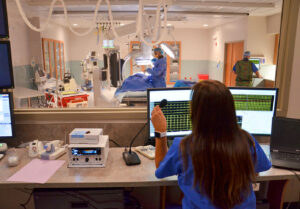






Heart failure is a chronic condition in which the heart can’t pump blood as well as it should. It doesn’t mean the heart has stopped working — it means the heart needs support to work more effectively. When the heart can’t keep up with the body’s needs, fluid can build up in the lungs, legs and other tissues, causing symptoms that affect daily life.
Although heart failure is a serious condition, many people live full, active lives with the right treatment plan. Early diagnosis, consistent follow-up care and heart-healthy habits all play a powerful role in managing symptoms and slowing the progression of the disease. Our cardiology team at Mount Nittany Health is here to guide you through every step, helping you understand your condition and feel confident about your care.
Causes of heart failure
Heart failure can develop for many different reasons. In most cases, it’s the result of another condition that has damaged or weakened the heart over time. Common causes include:
- Coronary artery disease (CAD): Narrowed or blocked arteries make it harder for the heart to receive enough oxygen-rich blood.
- High blood pressure: When blood pressure stays high, the heart has to work harder, which can weaken the heart muscle.
- Heart attack: Damage from a past heart attack can affect how well the heart pumps.
- Heart valve problems: Leaky or narrowed valves can place extra strain on the heart.
- Cardiomyopathy: Diseases of the heart muscle — sometimes genetic, sometimes caused by infections or alcohol use — can reduce the heart’s ability to pump.
- Arrhythmias: Irregular heart rhythms may cause the heart to beat too fast, too slow or unevenly.
- Other conditions: Thyroid disorders, diabetes, obesity, sleep apnea or certain medications can contribute to heart failure.
Understanding the cause helps your care team create the most effective treatment plan.
Risk factors for developing heart failure
Certain factors increase your likelihood of developing heart failure, even before symptoms appear. These include:
- High blood pressure
- Coronary artery disease
- Diabetes
- Obesity or excess weight
- Smoking
- Heavy or long-term alcohol use
- Advancing age (especially 65+)
- Family history of heart disease
- Sleep apnea
- Chronic kidney disease
- Prior chemotherapy or radiation therapy
Recognizing your risk factors early allows your care team to help you prevent or delay heart failure.
Types of heart failure
Heart failure can affect different parts of the heart and impact how the heart pumps or fills with blood.
- Left-sided heart failure: The most common form. Fluid may build up in the lungs, causing shortness of breath.
- Heart failure with reduced ejection fraction (HFrEF): The heart muscle is too weak to contract normally.
- Heart failure with preserved ejection fraction (HFpEF): The heart muscle becomes stiff and can’t fill properly.
- Right-sided heart failure: Usually caused by left-sided heart failure. Fluid may collect in the legs, abdomen or liver.
- Congestive heart failure (CHF): A term often used when fluid buildup is present.
Your provider will explain which type you have and what it means for your care.
Signs and symptoms of heart failure
Heart failure symptoms can range from mild to severe and may get worse over time. Common signs include:
- Shortness of breath during activity or while lying down
- Persistent coughing or wheezing
- Swelling in the feet, ankles, legs or abdomen
- Fatigue or weakness
- Sudden weight gain from fluid retention
- Feeling lightheaded or dizzy
- Rapid or irregular heartbeat
- Difficulty concentrating or feeling unusually tired
Even subtle changes can indicate that your heart is under strain, so it’s important to communicate any new or worsening symptoms.
When to call a doctor
Contact your care team if you experience:
- New or worsening shortness of breath
- Swelling that’s getting worse
- Rapid weight gain (more than 2 to 3 pounds in a day or 5 pounds in a week)
- Increased fatigue or decreased ability to exercise
Call 911 or seek emergency care immediately if you have:
- Chest pain
- Severe shortness of breath
- Fainting or near-fainting episodes
- A rapid or irregular heartbeat that won’t slow down
Diagnosing heart failure
To diagnose heart failure, your provider will review your medical history, discuss your symptoms and perform a physical exam. Additional tests may include:
- Echocardiogram: Measures how well your heart pumps blood.
- Electrocardiogram (EKG/ECG): Checks the heart’s electrical activity.
- Chest X-ray: Shows the size of your heart and any fluid buildup.
- Blood tests (including BNP): Look for markers of heart strain.
- Stress testing: Evaluates how your heart performs during exercise.
- Cardiac imaging (MRI, CT): Provides detailed pictures of heart structure.
- Cardiac catheterization: Checks for blockages in the heart’s arteries.
These tests help your care team understand the cause and stage of your heart failure and guide your treatment plan.
Stages of heart failure
Heart failure is often described in stages to help guide care:
- Stage A: High risk for heart failure but no symptoms yet (e.g., high blood pressure, diabetes).
- Stage B: Structural heart disease but no symptoms.
- Stage C: Structural heart disease with current or past symptoms such as shortness of breath or fatigue.
- Stage D: Advanced heart failure with severe symptoms even at rest.
Your team will discuss where you fall within these stages and what steps can help protect your heart.
Treatments for heart failure
Heart failure is usually managed with a combination of lifestyle changes, medications and in some cases, procedures or devices.
Lifestyle recommendations may include:
- Eating a heart-healthy, low-sodium diet
- Staying active as recommended by your provider
- Monitoring daily weight
- Managing stress
- Avoiding smoking and limiting alcohol
Common medications include:
- Diuretics to reduce fluid buildup
- ACE inhibitors, ARNIs or ARBs to relax blood vessels
- Beta-blockers to help the heart beat more efficiently
- Mineralocorticoid receptor antagonists
- SGLT2 inhibitors
- Medications that support heart rhythm or strengthen heart function
Procedures and advanced therapies may include:
- Implantable devices such as pacemakers or defibrillators
- Cardiac resynchronization therapy (CRT)
- Valve repair or replacement
- Coronary interventions for blocked arteries
- Ventricular assist devices (VAD)
- Heart transplant in select advanced cases
Your cardiologist will personalize your treatment plan based on your type and stage of heart failure.
Heart Failure Program at Mount Nittany Health
At Mount Nittany Health, our Heart Failure Program is designed to support and guide adults living with heart failure — whether newly diagnosed, recently discharged from the hospital or managing chronic symptoms at home. The program focuses on comprehensive, personalized care rather than a one‑size‑fits-all approach.
What to expect with our program
- Personalized care plans: From the start, your care team will work with you — considering your health history, symptoms and goals — to build a treatment plan that fits your life.
- Symptom management and medication optimization: Regular check‑ins and reviews help ensure that medications are working effectively and that symptoms — like fluid retention, fatigue or shortness of breath — are kept under control.
- Education and empowerment: We provide education on heart failure, heart‑healthy nutrition, lifestyle changes and self-management — empowering you to take an active role in your heart health.
- Frequent monitoring and follow-up: Continuous monitoring and follow-up help catch changes early, adjust treatment as needed and reduce the risk of complications or hospital readmissions.
- Multidisciplinary team-based care: You’ll have access to a diverse team — cardiologists, nurses, dietitians and other specialists — all collaborating to support your heart health and overall well‑being.
- Focus on quality of life: Beyond treating the condition, the program aims to help you stay as healthy and active as possible so you can continue daily activities with fewer limitations.
Who benefits most from the program
The Heart Failure Program is especially helpful if you:
- Are newly diagnosed with heart failure
- Have recently been discharged from the hospital for heart failure
- Have chronic heart failure with worsening symptoms
- Experience frequent hospitalizations or emergency room visits for heart-related issues
- Struggle with symptoms such as shortness of breath, fluid retention (swelling), fatigue, sudden weight gain or persistent cough
- Want to learn more about heart-healthy lifestyle changes and long-term management strategies
At Mount Nittany Health, we believe that managing heart failure is a partnership. Our goal is to provide expert, compassionate care — tailored to you — so you can live your life as fully and comfortably as possible.
 Cardiovascular Care Providers
Alexander Szymanski, MD
Cardiovascular Care
 4.9
4.9

Allison Saal, PA-C
Cardiovascular Care
4.7
Charles Nydegger, MD
Cardiovascular Care
4.7

Christopher Jones, MD
Cardiovascular Care
4.9

Christopher Kocher, MD
Cardiovascular Care
4.9

James Gerardo, MD, PhD
Cardiovascular Care
4.8
Jeffrey G. Eaton, MD
Cardiovascular Care
4.9

Jennifer Illig, PA-C
Cardiovascular Care
4.9
Kip M. Peeler, PA-C
Cardiovascular Care
4.8

Nicole Wolfe, PA-C
Cardiovascular Care
4.8

Albert R. Zoda, MD, FACC
Cardiovascular Care
5

Priscilla Weaver, CRNP
Cardiovascular Care

Julie Parker, CRNP
Cardiovascular Care
 Cardiovascular Care Locations