Cancer Care
A small change, a life-changing decision: Georgia’s breast cancer story
October 14, 2026
3 min read
Key takeaways
-
Pay attention to changes in your body.
Even subtle signs, like dimpling, swelling or a lump, are worth discussing with a doctor. -
Early detection can make a difference.
Acting sooner can lead to earlier answers, more treatment options and greater peace of mind. -
Follow-up care matters.
After a breast cancer diagnosis and treatment, routine follow-up is an important part of staying proactive about your health.
For Georgia Peeler, life at 32 years old was perfect. Then, she noticed a dimple on the underside of her left breast. She thought it was normal, and pushed aside thoughts of having it checked out by a doctor for a few months while she continued to live life to the fullest.
A sign she decided to check
At the time, Georgia — now Mount Nittany Health’s Service Line Physician Liaison — was working in pharmaceutical sales when she came across a brochure encouraging anyone who noticed swelling, dimpling or lumps in their breast to consult a physician. Although she was nervous, she decided to get it checked.
A general surgeon was able to feel a one-centimeter lump, and Georgia was sent immediately for a mammogram. A lumpectomy confirmed her breast cancer diagnosis and she underwent a mastectomy and reconstruction.
Why early detection matters
Looking back, Georgia feels the message is clear: early detection matters. People are often afraid of a diagnosis, but putting off care only allows fear to take over.
“The worst part of a diagnosis is the unpredictability of it,” says Georgia. “A lot of days I didn’t know what would happen by the end of today, or tomorrow, or the end of the month, but when you have cancer, the sooner you get the diagnosis, the better.”
After Georgia’s diagnosis and procedures, she moved forward one day at a time, refusing to let the unpredictability of cancer dictate her joy. She got married and raised three children, staying focused on the joys of her kids’ involvement in sports, with their instruments and the everyday moments of family life.
Then, seventeen years after her original diagnosis, Georgia returned to a plastic surgeon to have her implants replaced. During the procedure, her care team noticed suspicious tissue, originally assumed to be scar tissue. Unfortunately, that tissue was the same cancer — it had returned.
A reminder to follow up
This experience reinforced another message Georgia feels strongly about: follow up. “After a diagnosis, don’t live your life for cancer,” says Georgia. “But make sure you follow up routinely and that you do what is wise and what is recommended.”
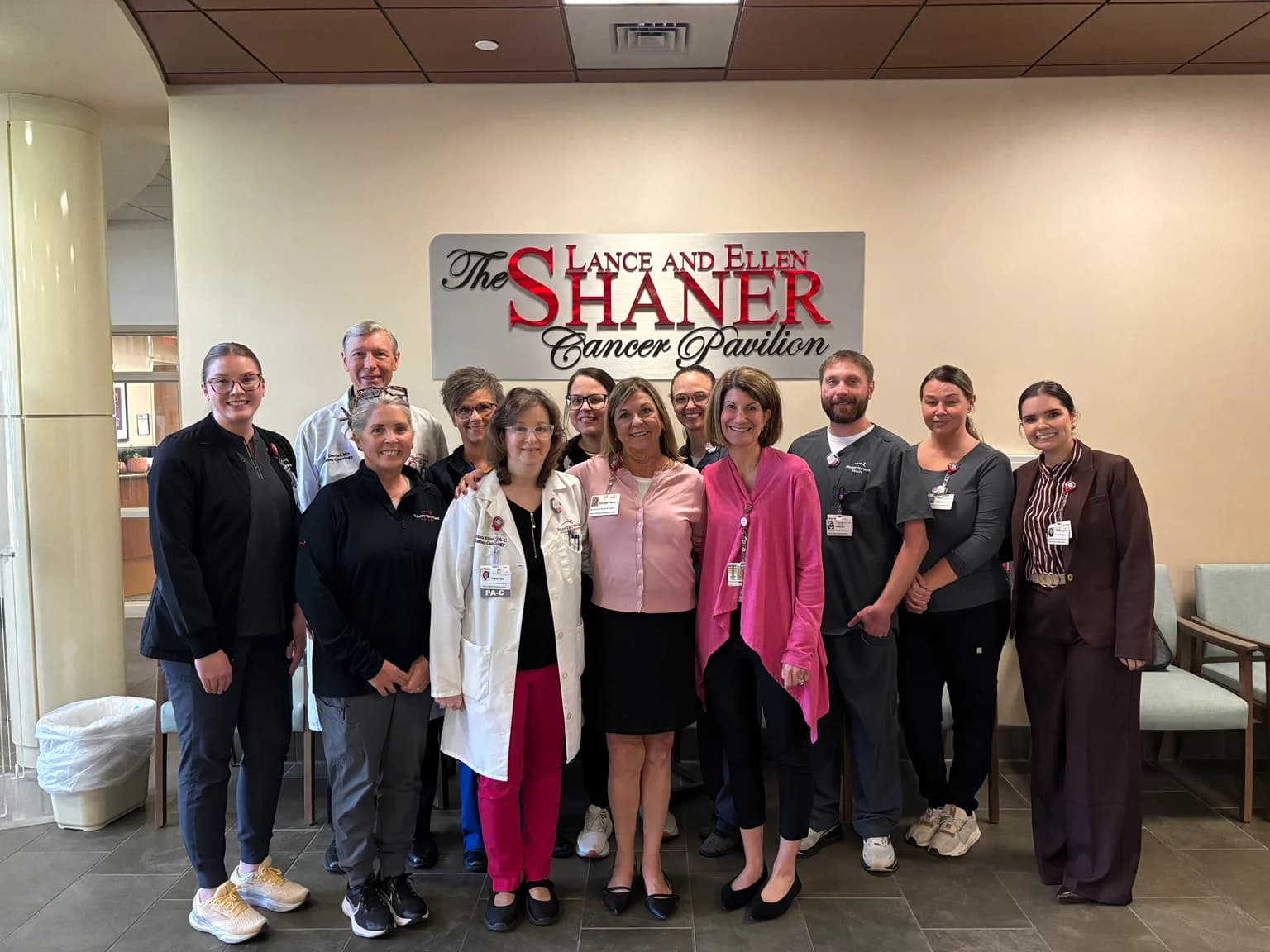
This time, Georgia received radiation oncology care at Mount Nittany Health, where she cannot say enough about the team who cared for her. She describes them as kind, informative and incredibly prepared. From explaining exactly what to expect to recommending the best lotions and creams for what is known to be a difficult treatment on the skin, the Mount Nittany Health Cancer Care team, shown in the photo above, made sure Georgia and her family were supported every step of the way.
Georgia has a lot of wisdom and words of advice and encouragement to share, but the biggest takeaway from her experience is to “take life one day and one chapter at a time.”
Her story is a reminder to listen to your body, act early, keep up with follow-up care and not let fear steal the joy from your life.