
Health and Wellness
Unlocking the benefits of a consistent bedtime routine for your child
January 23, 2026
3 min read

Why do toddlers always seem to have clever ways to avoid sleep? We all know how important sleep is for recharging our bodies. Quality sleep is especially vital for your little one’s growth and development, and they’ll need your guidance to build healthy sleep habits.
Creating a routine that works for both you and your child is essential. With the right approach, you can help your child develop sleep patterns that support their well-being now and in the future.
The benefits of a consistent sleep routine
A predictable sleep routine is a part of getting solid sleep. This helps your child’s body know that sleep is coming. When the routine is the same every night, your child will start to relax and get sleepy. This will make the transition to sleep much smoother.
“Preparing your child’s bedroom for a restful sleep is a piece of this elusive sleep puzzle,” says Julia Burton, CRNP, a pediatric nurse at Mount Nittany Health. “The environment that you expect your child to sleep in needs to be conducive to sleep.”
This includes ensuring your child’s bedroom is cool, quiet and dark. You can add a nightlight or a sound machine if that makes your child more comfortable. The room should be device-free — no tablets, phones or TVs.
Establish a bedtime based on your child’s wake time. For example, if your child needs 10 hours of sleep and needs to wake at 7:00 a.m. to get ready for school, bedtime should be 9:00 p.m.
Here are the recommendations for children based on age:
- Infants (0 to 3 months) need 14 to 17 hours, including naps
- Babies (4 to 12 months) need 12 to 16 hours, including naps
- Toddlers (1 to 2 years) need 11 to 14 hours, including naps
- Preschool-age kids (3 to 5 years) need 10 to 13 hours, including naps
- School-age kids (6 to 13) need 9 to 12 hours
- Teens (14 to 17) need 8 to 10 hours of sleep nightly
Establishing a bedtime routine
For younger kids, a warm bath provides a relaxing and calming environment that naturally lends itself to brushing teeth, applying lotion and changing into jammies.
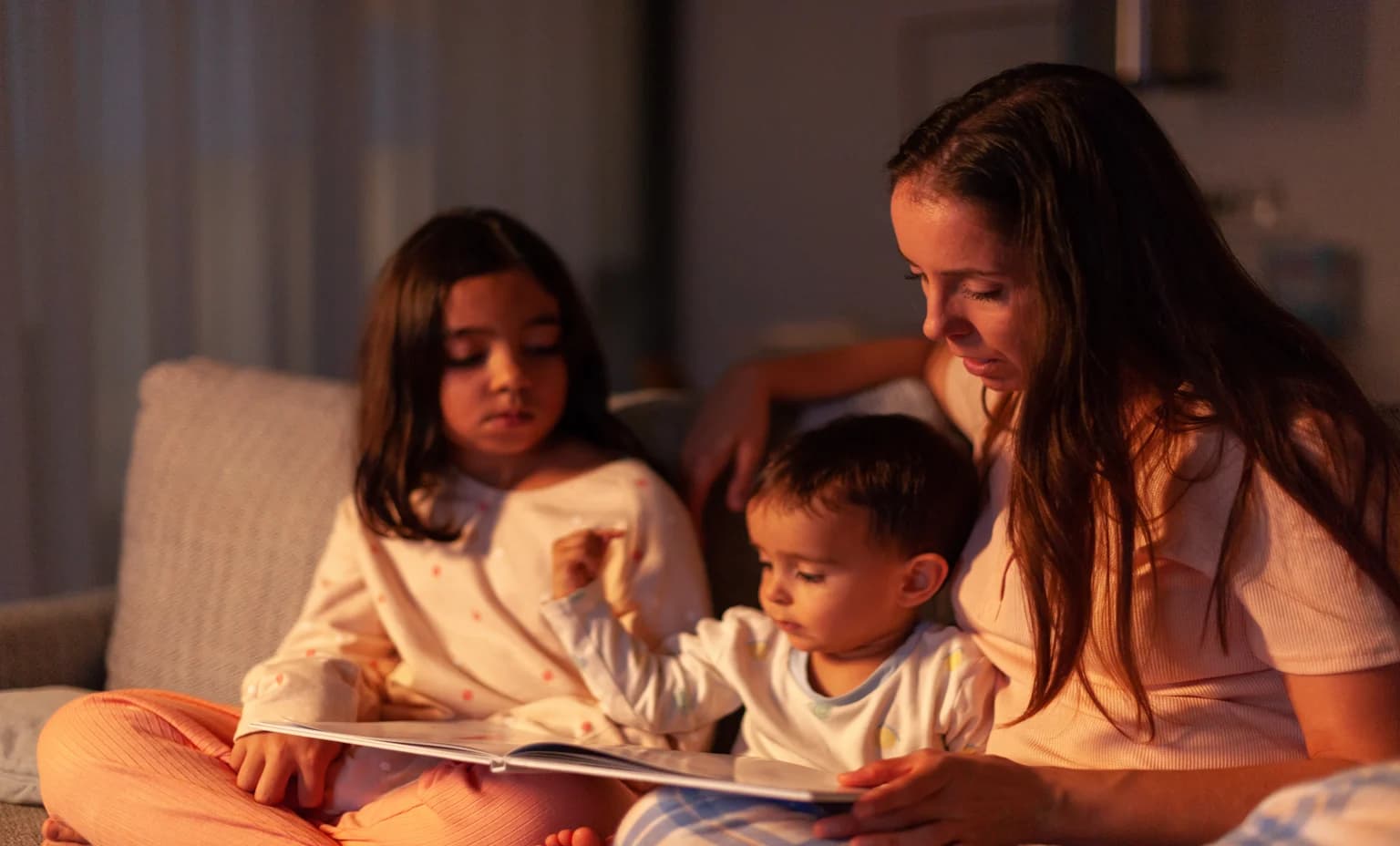
Books are a great addition to the bedtime routine. Reading is a calm activity with an ending. Books naturally offer an endpoint and can be carried over to older children who can read independently.
“Make sure your child knows the cue that their bedtime routine is over,” says Julia. “That may sound like, ‘Good night, I love you. I will see you in the morning.’”
At that point, leave the room and limit return visits. Especially for little ones, they will ask for everything under the sun to get you to return. “I need a drink,” “Can I have one more hug,” “Will you tuck me in?” The list can go on and on, but try to maintain consistent boundaries around not returning to their room.
As a parent, you play a vital role in shaping your child’s relationship with sleep. By prioritizing sleep and modeling healthy habits, you can help your child develop strong sleep habits and an appreciation for the importance of a good night’s rest.
Remember, every child is unique, and what works for one may not work for another. Be patient and flexible as you work to find the right combination of strategies for your family. If you encounter persistent sleep challenges, don’t hesitate to contact your child’s pediatrician for guidance and support.